

Conflict in the Great Lakes
ACLED’s latest data and analysis on Burundi, the Democratic Republic of Congo, Rwanda, and Uganda.


Recurrent, interconnected conflict in Africa’s Great Lakes region, spanning Burundi, Rwanda, Uganda, and the eastern Democratic Republic of Congo (DRC), has been driven by a number of factors, including competition over power, land, and natural resources. While violence is concentrated in the eastern provinces of the DRC, neighboring conflicts have impacted regional peace and security. The joint Congolese and Ugandan military force under Operation Shujaa in Ituri and North Kivu provinces has yet to bring an end to violence carried out by the Allied Democratic Forces (ADF), especially against civilians. Meanwhile, Burundian forces are fighting against the March 23 Movement (M23) and Rwandan military forces (RDF) in the DRC and further operations against Burundian rebel groups that operate from South Kivu province.
The DRC tends to rank high on ACLED’s Conflict Index over both local and regional tensions, with more turbulent and localized political violence driving the conflict in Burundi and Uganda. While Rwanda has been long considered stable, the offensive into the DRC led Congolese forces to launch retaliatory artillery strikes into Rwanda and may destabilize western areas of the country.
Armed groups in the Great Lakes region
The persistent conflict in the Great Lakes region has been driven by military forces, foreign-backed armed groups, rebel movements, and local militias. Since the re-emergence of the M23 in 2021, it has become the most violent group in the Great Lakes region. The M23 receives support from the RDF, or Rwanda Defence Force, whose soldiers often fight alongside the M23 and provide the rebels with advanced weapons. The ADF, an armed group operating in the eastern DRC and Uganda with reported ties to the Islamic State, has consistently carried out the most violence toward civilians in the Great Lakes. The ADF also remains a threat to Uganda, with a long history of cross-border violence. When confronting various threats, Congolese military forces (FARDC) have received support from numerous armed groups, bilateral military forces, and multilateral troops. Notably, the FARDC has drawn upon the Wazalendo coalition, a loose association of militias aligned with the Congolese military that initially emerged as localized youth self-defense groups.
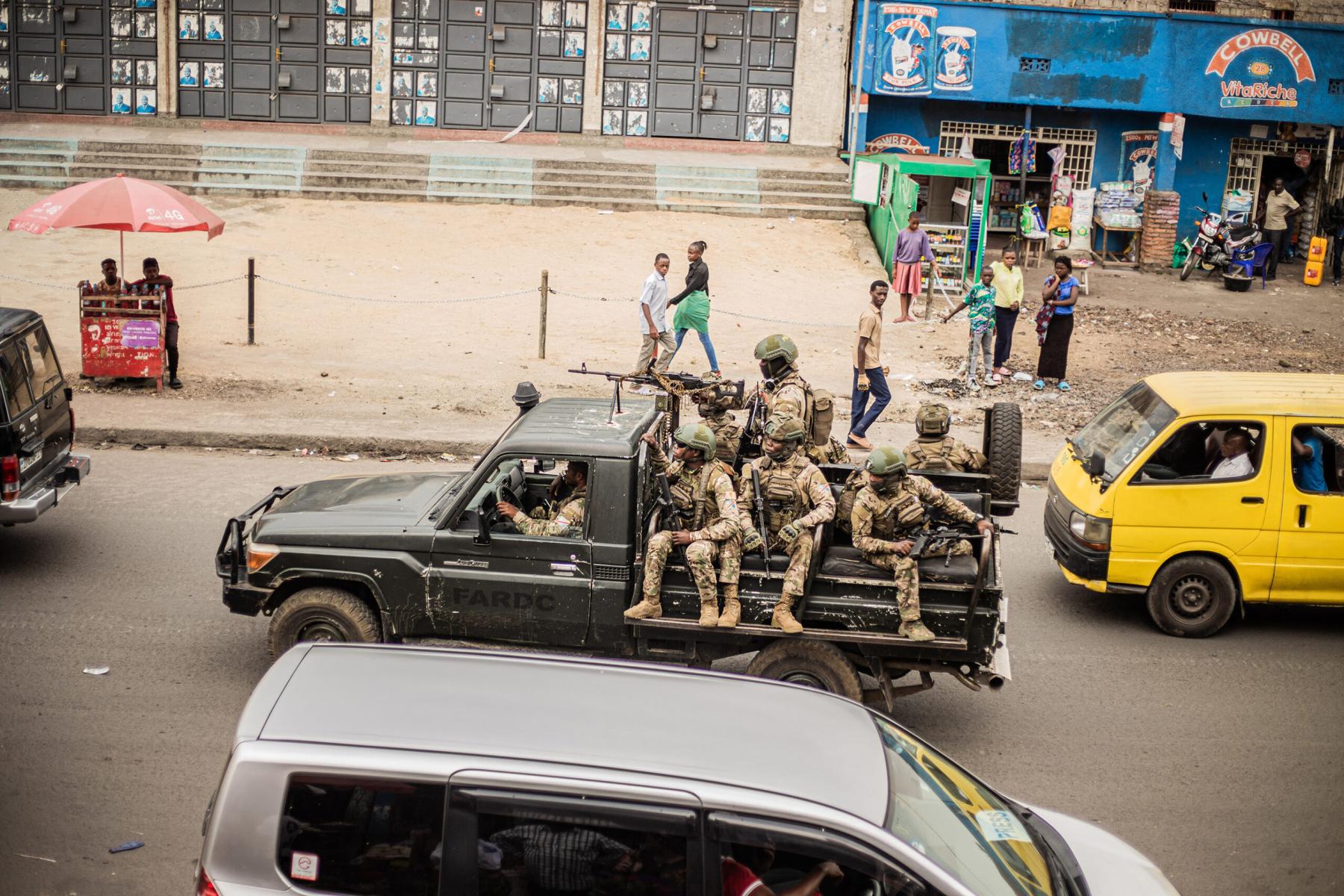
FARDC forces patrol in Goma on 23 January 2025. Photo by Jospin Mwisha/ AFP via Getty Images



ACLED's expert
For media queries and interview requests, reach out to our expert.

All analysis on the Great Lakes
Showing 10 of 12 items
Africa Overview: October 2025
Insurgent violence rose in Nigeria’s Borno state, the US’ first recorded drone strike in the Sanaag region of Somalia killed an elder, and in Sudan the RSF made gains in El Fasher.
Africa Overview: September 2025
JNIM overran the Farabougou army base in Mali after a five-year siege, Boko Haram escalated attacks on the Cameroon-Nigeria border, and targeted violence in Darfur drove an increase in civilian deaths in August.
Q&A | The Islamic State’s pivot to Africa
In this Q&A, ACLED’s experts discuss how Islamic State affiliates operate in Somalia, the Sahel, the Lake Chad basin, the Great Lakes region, and northern Mozambique, and how authorities are responding to this growing threat.
DRC: Expanding areas of M23’s operations — Expert Comment
The M23 expands beyond its 2012 rebellion with significant territorial gains in Bukavu and North Kivu.
Q&A | What is happening in and around Goma?
Africa Senior Analyst Ladd Serwat discusses the M23 siege of Goma, the conflict's escalation, and civilian impacts.
In the Great Lakes region, lasting peace remains elusive between armed groups with international ties
Peace agreements remain especially delicate due to the inability or unwillingness of the Congolese and Rwandan governments to rein in violence by proxy groups.
The Rwanda Defence Force (RDF) operations abroad signal a shift in Rwanda's regional standing
Explores the roles and operations of the Rwanda Defence Force in regional conflicts and their geopolitical significance.
Conflict Watchlist 2024 | Democratic Republic of Congo: Re-elected President Tshisekedi Faces Regional Crisis in the East
Violence in the eastern DRC continues with the M23 insurgency, regional tensions, and ADF aggression.
Disorder and Distrust Ahead of the 2023 Elections in the Democratic Republic of Congo
Analysis of challenges and violence surrounding the 2023 elections in DRC amid concerns about the CENI's impartiality.
The resurgence and alliances of the March 23 Movement (M23)
This report profiles the M23 armed group in the Democratic Republic of Congo, analyzing its areas of operation and the changing conflict dynamics around it.